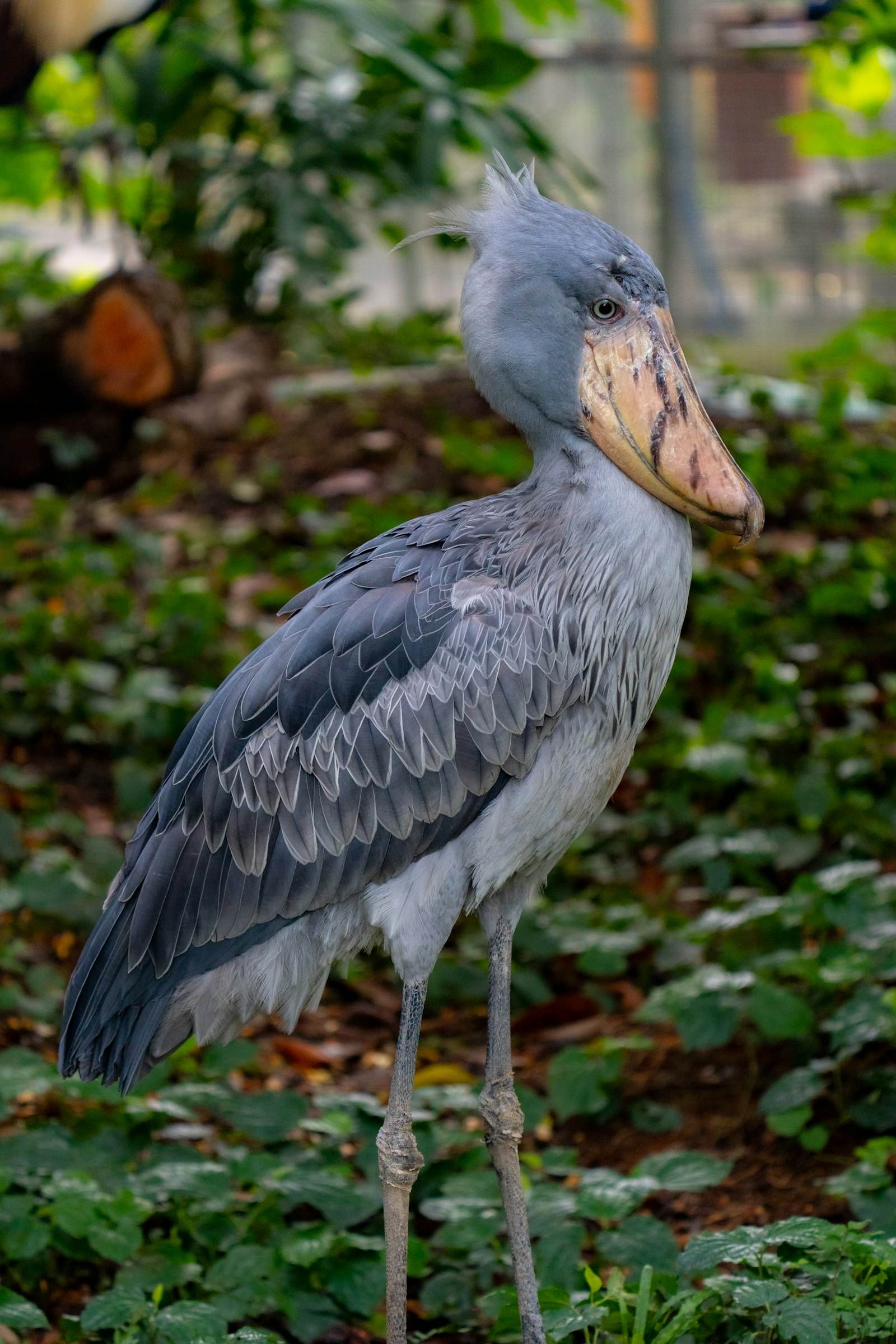
Ask a room of birders which single bird they would cross an ocean for and the Shoebill comes up more than almost anything else. It is not hard to see why. A metre and a half tall, slate grey, with a bill like a Dutch clog and a stare that has not changed since the Eocene — the only member of its family, and a bird that looks back at you.
The reliable way to see one is to go to Uganda. Here is how we do it.
Mabamba, by dugout canoe
About fifty kilometres west of Entebbe, on the shore of Lake Victoria, an extensive papyrus swamp runs into a labyrinth of channels and lagoons. This is Mabamba — a community-protected wetland, an Important Bird Area, and home to several pairs of Shoebill.
The search is done the old way: poled and paddled through the channels in a wooden canoe, at first light, before the day’s heat pushes the bird deep into the papyrus. A Shoebill hunts by standing motionless over a lungfish channel, sometimes for an hour at a time, which means that when your boatman finds one — and the Mabamba boatmen are astonishingly good at finding one — you drift to within a respectful distance of a bird that simply does not move. The photographs come out looking staged. They are not.
The supporting cast alone would justify the morning: Papyrus Gonolek, Malachite Kingfisher, Blue-breasted Bee-eater, African Marsh Harrier, Goliath Heron, and the endless traffic of jacanas and pygmy geese across the lily pads.
The Nile delta, from a launch
The second chance comes days later and four hundred kilometres north, where the Victoria Nile spills into Lake Albert in Murchison Falls National Park. An afternoon boat down the delta passes Saddle-billed Stork, Red-throated Bee-eater colonies in the banks, African Skimmer, and — with luck and a guide who knows the channels — a Shoebill standing in the floating vegetation like a grey monument.
Two sites, two habitats, two genuinely good chances. That redundancy is deliberate: we build the itinerary so that no single morning’s weather can take the bird away from you.
When to go
Shoebills are resident — there is no season to miss them — but the dry months make the birds easier to find as water levels drop and the lungfish concentrate. Our Uganda journey runs in July 2028 for exactly this reason, and Mabamba is day two, when the group is fresh and the light is at its best.
The full eighteen-day route — which continues to Budongo’s Royal Mile, chimpanzee tracking at Kibale, and mountain gorillas at Bwindi — is on the journey page. Registration is now open on the journey page.
We would love to show you this bird.