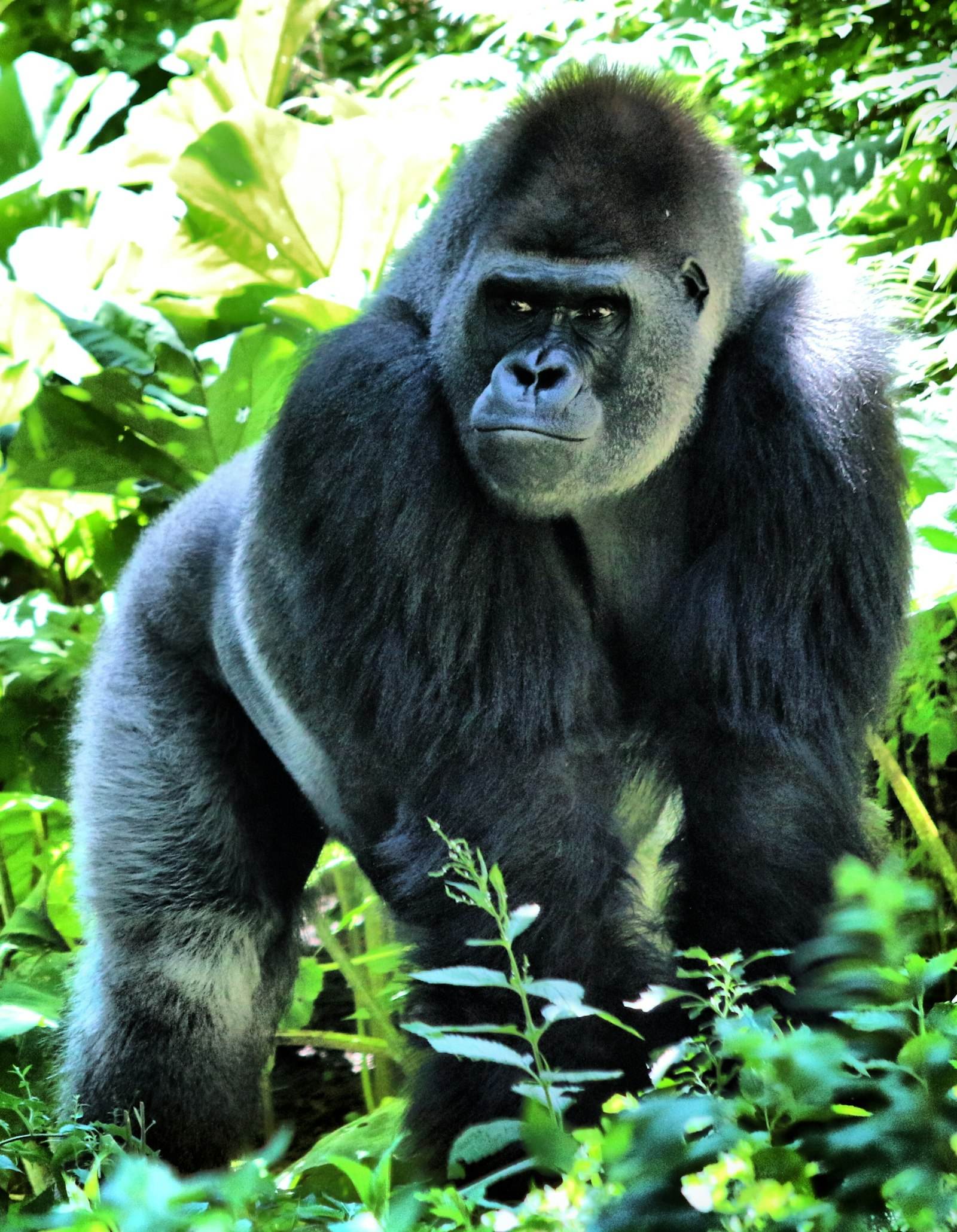
There is a version of the Uganda trip where the gorillas are an add-on — two days stapled to the end of the birding, arranged through a second operator, with a different vehicle and a hotel you didn’t choose. We don’t run that version. On our Uganda journey the mountain gorillas sit in the middle of the itinerary, at Bwindi, exactly where the birding is best. Here is how the day actually works.
The permit
Mountain gorilla trekking in Uganda happens in Bwindi Impenetrable National Park, under a strict permit system run by the Uganda Wildlife Authority. One permit, one person, one hour with a habituated gorilla family, in a group of no more than eight visitors. The hour is enforced and it should be — it is what keeps the families wild, healthy, and there for the next fifty years.
Permits are limited and sell out far in advance, which is why we secure them when you register, not when you land. On our journey the gorilla permit — and the chimpanzee permit at Kibale — are included in the trip fee. No supplements, no separate bookings, no surprises.
The day
You report to the park headquarters at Buhoma early, with the mist still in the valley. Rangers brief the group, assign you to a family, and then you walk — through terraced fields at first, then into the forest proper. The trek can take one hour or it can take five; the trackers have been with the family since dawn and the rangers know roughly where you are going, but the forest is called Impenetrable for honest reasons. A reasonable level of fitness is required. Porters are available, they are superb, and hiring one is one of the best things your money does in this valley.
Then the trackers slow, and stop, and point — and for one hour you stand in the understorey with a family of mountain gorillas going about their morning. Adults feeding and grooming. Youngsters swinging through the vines. A silverback whose calm authority you can feel from ten metres. It is, without exaggeration, the most affecting hour most travellers ever spend with a wild animal.
What it does to the birding
Nothing — that is the point of doing it properly. Bwindi is not a detour from the birding; it is the birding. African Bird Club members have voted it the number one birding site in Africa, and it holds over twenty Albertine Rift endemics: Regal Sunbird, Rwenzori Batis, Handsome Francolin, Grauer’s Warbler, and — up at Ruhija, where we spend a further night — a real chance of the African Green Broadbill at Mubwindi Swamp.
So the gorilla day sits inside three full days at Bwindi. Trek day itself usually produces forest birds on the walk in and out. The day before and the day after are pure birding, at two different altitudes, from two different lodges. Nothing is sacrificed; the two great experiences of Uganda simply share a forest.
The practical notes
- Fitness: you need to walk uphill on rough ground, possibly for some hours, at around 1,500–2,350 m. Steady does it; the pace is set by the group.
- Gear: boots you trust, gardening gloves for the vegetation, rain shell regardless of forecast. Porters carry everything else.
- Age: the minimum age for gorilla trekking is 15.
- Cost: included in our trip fee, along with the Kibale chimpanzee permit and gratuities for the local guiding team.
The full eighteen-day itinerary — Shoebill at Mabamba, the Royal Mile, Queen Elizabeth’s crater country, and three nights at Bwindi — is on the journey page. It runs in July 2028 and registration is now open.
Bring boots. The forest does the rest.