Food, wine and culinary culture along your Ecotone Journeys route.
Lisbon — Days 1–2
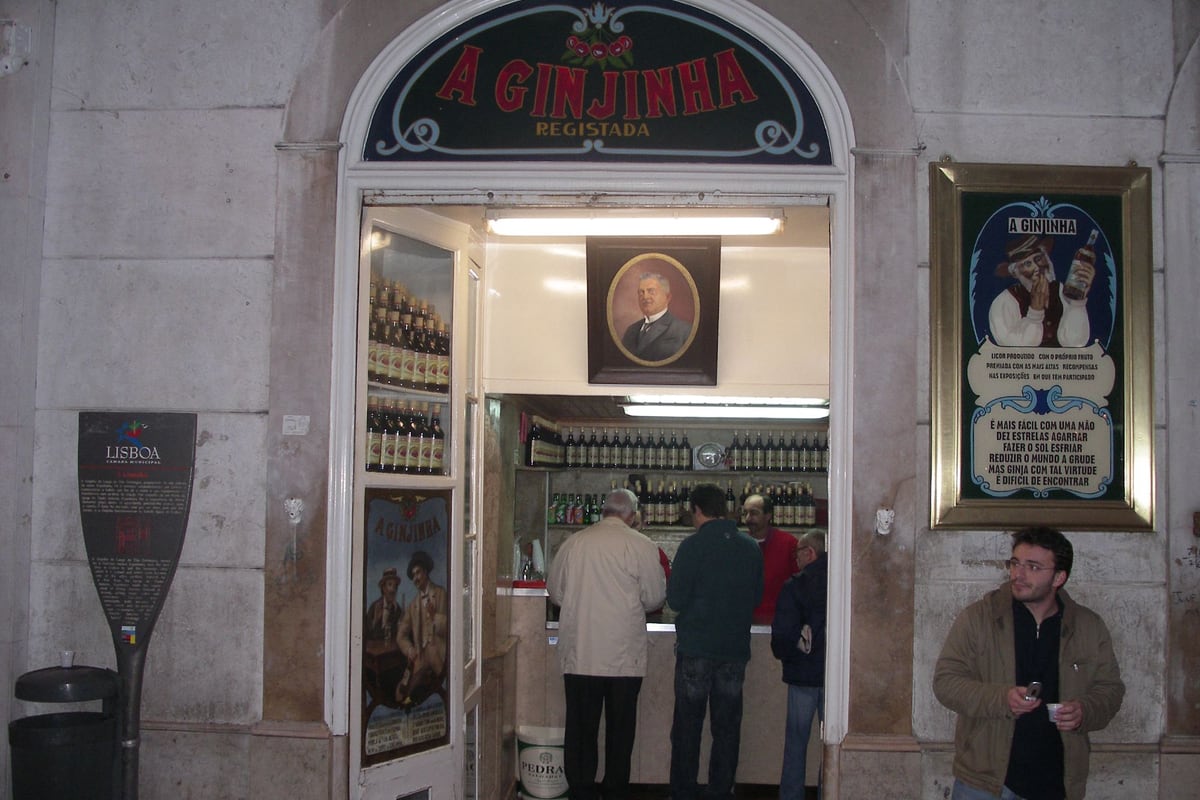 Ginjinha bars: a hole-in-the-wall institution · CC BY 2.0
On the plate
Lisbon’s food is coastal and Atlantic at heart, even in a city of hills. Bacalhau (salt cod) is the obsession — Portuguese cooks claim there’s a different recipe for every day of the year, and you’ll likely encounter it at least once, whether pulled apart and baked with potatoes and egg (bacalhau à Brás) or shredded into fritters (pastéis de bacalhau) served as a bar snack with a cold beer. Grilled sardines (sardinhas assadas), simply charred over coals and eaten with boiled potatoes and greens, are a summer staple in the working-class neighbourhoods you’ll walk through in Alfama.
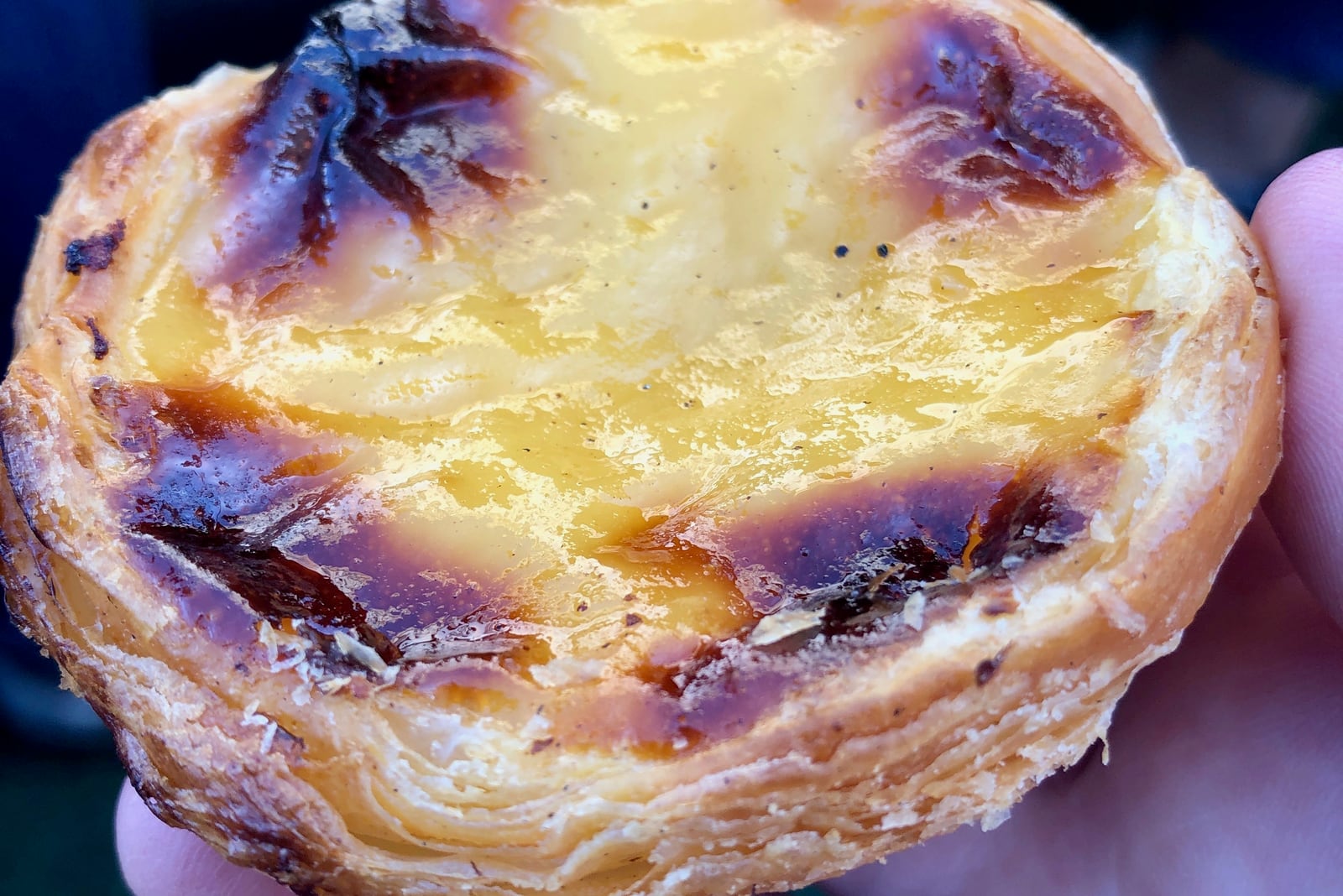
No stop in Belém is complete without the pastry that made the neighbourhood famous: pastéis de nata, the custard tarts baked to a centuries-old recipe at the original Pastéis de Belém bakery since 1837. The recipe is older still — believed to have been developed by monks at the nearby Jerónimos Monastery, who used egg whites to starch their habits and needed somewhere to put the leftover yolks. Convents across Portugal did the same thing, which is why so much of the country’s sweet pastry tradition (doçaria conventual, or “convent sweets”) traces back to monasteries.
In the glass
This is a good place to get your bearings on Portuguese wine before heading into wine country proper. Order a vinho verde — a young, slightly effervescent white from the Minho region in the north — as a bright, low-alcohol aperitif on a warm evening. For something uniquely Lisboan, try ginjinha (or ginja), a sour cherry liqueur served in tiny shot glasses from hole-in-the-wall bars around the city centre, traditionally with a cherry dropped in the bottom. Bica is the local word for a short espresso — order it that way in Lisbon and you’ll get knowing nods from the barista.
Alentejo — Évora, Castro Verde & Beja — Days 3–6
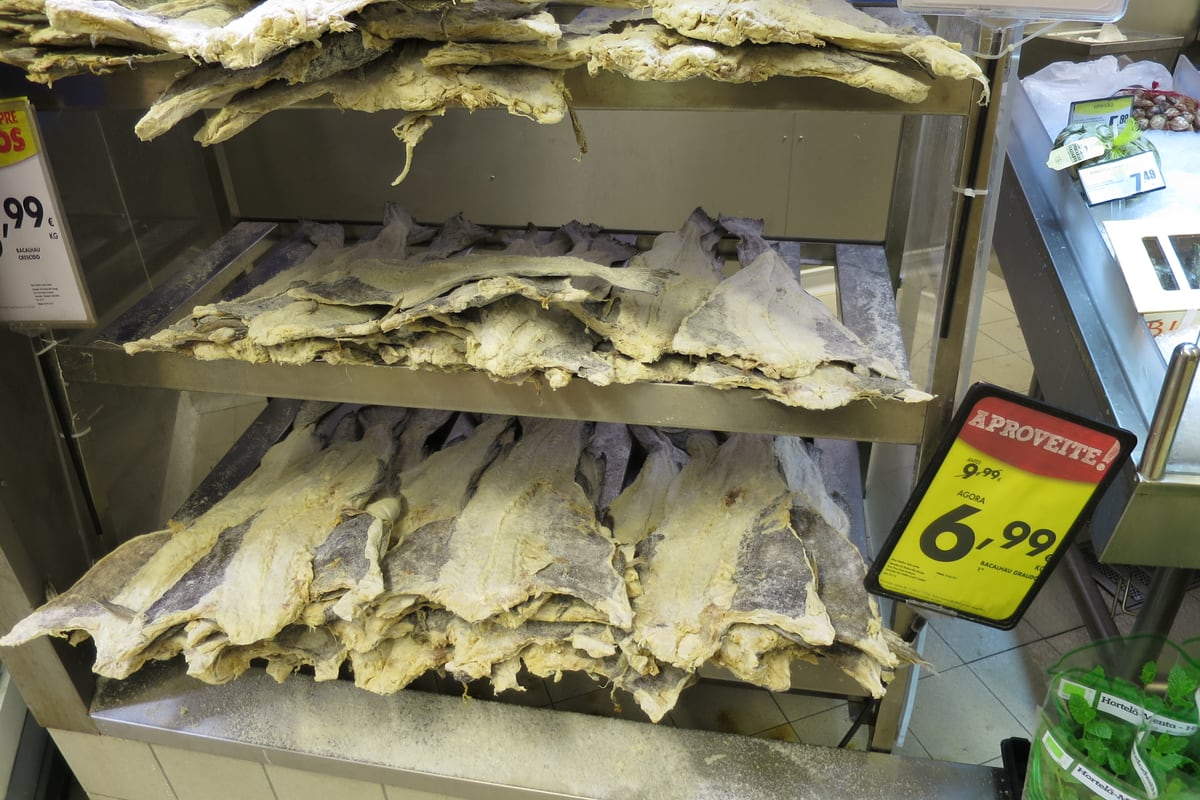 Bacalhau: Portugal’s national obsession, available in hundreds of preparations · CC BY-SA 4.0
This is arguably the most distinctive food region on the entire trip — and it’s not a coincidence that it’s also the steppe-birding heartland. The same low-intensity farming — cereal fields, fallow ground, free-ranging pigs under cork oaks — that creates habitat for Great Bustard and Little Bustard also produces Alentejo’s most famous ingredients.
On the plate
The Alentejo is bread country, and bread shows up as an ingredient as often as a side. Açorda is a rustic bread soup thickened with garlic, olive oil, cilantro and a poached egg — humble peasant food elevated to a regional signature. Migas is a similar idea: bread fried with garlic and pork fat until it takes on the texture of a dense stuffing.
The region’s other calling card is porco preto, black Iberian pork from pigs that forage on acorns under the montado’s cork and holm oaks — the same landscape structure you’ll be scanning for Iberian Grey Shrike and Lesser Kestrel. The acorn diet gives the meat a marbled, almost nutty character, typically grilled simply or paired unexpectedly well with clams in carne de porco à alentejana. Look also for queijo Serpa and queijo de Évora, sharp sheep’s-milk cheeses from small producers scattered across the plateau, and for açorda’s sweeter cousin, sericaia — a cinnamon-dusted egg custard traditionally served with Elvas plums.
In the glass
Alentejo is one of Portugal’s most important wine regions, and its warm, dry climate — the same climate that makes steppe birding possible — produces big, fruit-forward reds, often blends of Aragonez, Trincadeira and Alicante Bouschet. It’s also home to a curious ancient survival: vinho de talha, wine fermented and aged in large clay amphorae (talhas) in a tradition going back to the Roman occupation of the region. A few small producers around Évora and Redondo still make it this way; if you spot it on a menu it’s worth trying as a living link to Roman-era winemaking that exists almost nowhere else in Europe.
Culture at the table
Meals here are unhurried, and it’s worth knowing that Alentejo’s food culture is inseparable from cante alentejano — the region’s UNESCO-recognised tradition of unaccompanied polyphonic singing, historically performed by field workers and still heard today in village squares and, occasionally, in restaurants after dinner. The rhythm of long, slow meals and communal song both trace to the same source: an agricultural economy built around large estates (latifúndios) and collective rural labour.
Algarve — Sagres & Cape St Vincent — Days 7–8
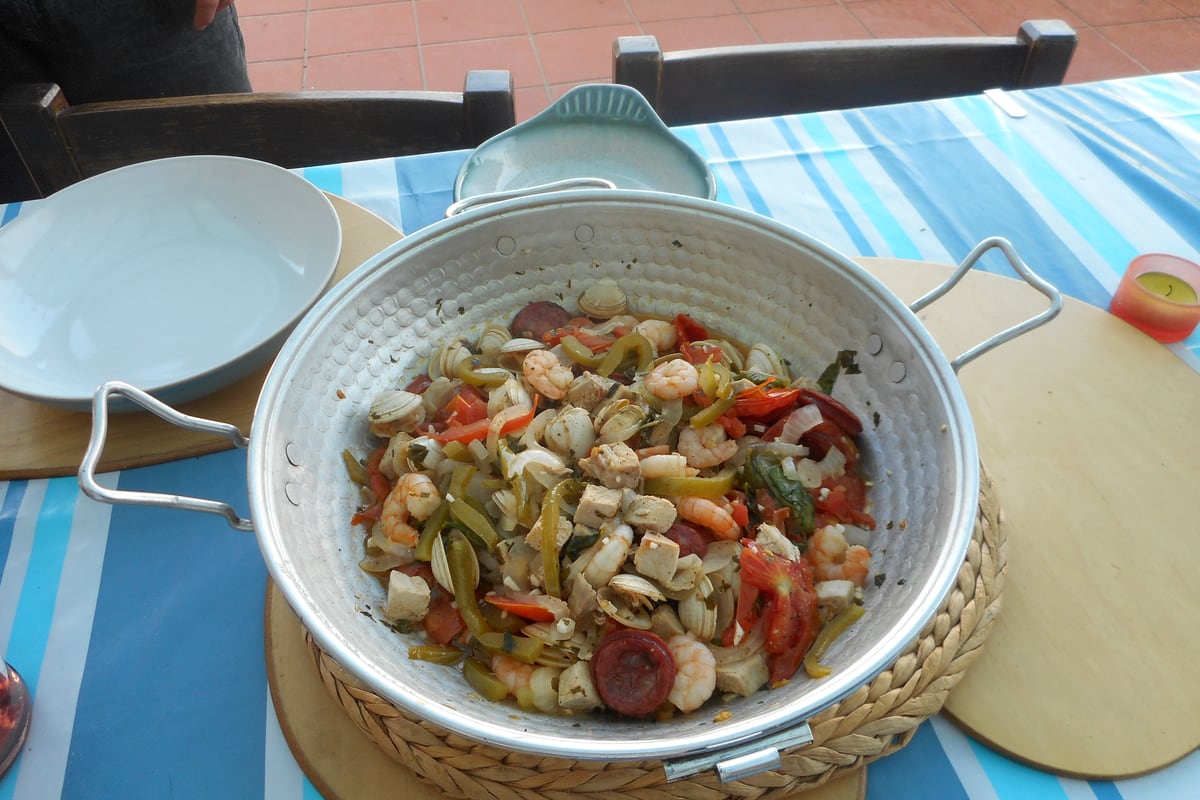 Cataplana: named for the Moorish-origin hinged copper pot in which it is cooked and served · CC BY-SA 4.0
On the plate
The southwest coast is where Portugal’s freshest seafood meets its wildest weather. Cataplana — named for the hinged, clamshell-shaped copper pot the dish is cooked and served in — is the region’s signature: usually a mix of clams, shrimp, white fish and sausage steamed together with tomato, onion and peppers. The cataplana vessel itself is thought to have Moorish origins, a small but tasty reminder of the roughly 500 years of Islamic rule that also shaped Silves, which you’ll pass through on the drive south.
Fresh percebes (goose barnacles), harvested by hand from the pounding surf on exactly the kind of exposed rock you’ll see below the cliffs at Cape St Vincent, are a local delicacy — and a genuinely dangerous one to harvest, which is part of why they’re prized. Amêijoas (clams) done simply à Bulhão Pato, in garlic, olive oil and cilantro, are a lighter option after a windy morning of raptor-watching.
Silves, which you’ll pass on Day 7, sits at the heart of Portugal’s citrus belt — orange and lemon groves introduced under Moorish agriculture still blanket the valley below its castle, and Algarve orange liqueurs and marmalades make good regional souvenirs.
In the glass
Look for Medronho, a fiery brandy distilled from the fruit of the strawberry tree (Arbutus unedo) — the same shrub that grows wild in the scrubland around Cape St Vincent and Mértola. It’s a rustic, often home-distilled spirit throughout the Algarve and the Alentejo alike, worth a cautious sip rather than a full glass. Algarve whites pair well with the seafood-heavy menus of Sagres.
Ria Formosa & Tavira — Days 9–10
On the plate
This is lagoon and salt-marsh country, and the food reflects it directly. Because Tavira’s salt pans have been worked by hand for centuries, expect flor de sal (hand-harvested salt flower) as a finishing salt on nearly everything — it makes a good lightweight gift to bring home. Amêijoas na cataplana reappears with a lagoon-fresh edge, and razor clams (lingueirão) grilled simply with garlic are a Ria Formosa speciality drawn straight from the same eelgrass beds that shelter the region’s seahorses.
Round out the stay with cataplana again — the Day 10 itinerary specifically calls for one — and take the opportunity in Olhão, whose early-20th-century market hall you’ll pass, to see the daily fish auction that still supplies much of the eastern Algarve.
In the glass
Tavira’s calmer, warmer microclimate compared to windswept Sagres makes for a good final wine stop — regional Algarve whites and rosés, often light and citrus-forward, are built for exactly this kind of lagoon-side, late-afternoon drinking.
A Few Culinary Threads That Run Through the Whole Trip
- Olive oil (azeite) is Portugal’s other great agricultural export, and Alentejo in particular produces some of the country’s best — look for single-estate bottles from around Évora or Moura.
- Moorish influence shows up in food far more than most visitors expect: cataplana, marzipan-based sweets, rice dishes and the region’s citrus orchards all trace back to roughly 500 years of Islamic rule across the Alentejo and Algarve, ending with the Christian reconquest in the 13th century.
- Convent sweets (doçaria conventual) — egg-yolk-heavy pastries like pastéis de nata, but also regional cousins like sericaia — exist across the country because of the same monastic economy, in which convents supported themselves partly by selling preserves and pastries.
- Portuguese coffee culture is simple and fast: a bica (espresso) standing at the counter is the norm, not a leisurely sit-down affair.
Bom apetite — and boas observações (good birding) along the way.