1
Day 1
Comayagua
Arrive Palmerola (XPL) · Hotel Caxa Real
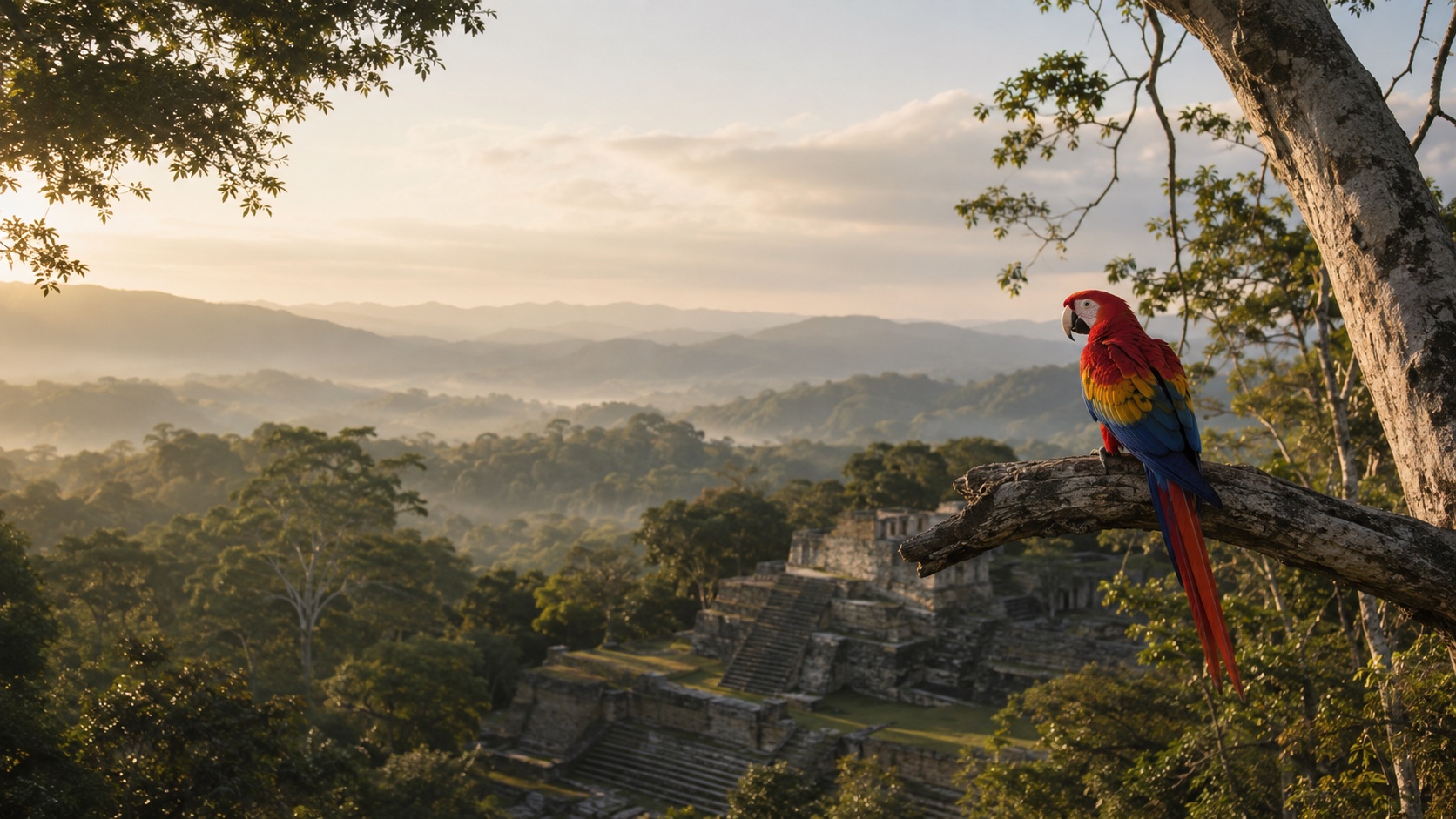
AI-generated illustration · Ecotone Journeys
Honduras
Birds, Maya Ruins & Rainforest Across Honduras
register your interestFrom the shaded colonial plazas of Comayagua to the Maya terraces of Copán, Honduras rewards a slower, more curious kind of journey. Follow the changing habitats through pine-oak highlands, shade-grown coffee, cloud forest and lake marshes to the Caribbean rainforest of Pico Bonito. Birds lead the way, with butterflies, mammals, botany and living culture woven into every day.
The route · Comayagua → Copán Ruinas → Lake Yojoa / PANACAM → Pico Bonito → San Pedro Sula
Coming soon. Travel in a small group that averages eight guests and may run with up to ten, depending on the final lodging, route and other on-the-ground factors. Arrive at Palmerola International Airport (XPL) and depart from Ramón Villeda Morales International Airport (SAP).
The itinerary below includes the proposed lodges and typical dry-season conditions; dates, accommodation and final pricing will be confirmed when registration opens.
Tour geography · 11 days
Geographic outline · route schematic
Route
Day 1
Arrive Palmerola (XPL) · Hotel Caxa Real
Days 2–4
Ruins, Macaw Mountain, coffee highlands · Hotel Marina Copan
Days 5–6
Pulhapanzak, cloud forest, lake boat · PANACAM Lodge
Days 7–9
Cangrejal Valley, Cuero y Salado, emerald dry forest, Garífuna coast · The Lodge at Pico Bonito
Days 10–11
Canopy towers, then depart (SAP)
Transfer times: Comayagua–Copán ~5 h, Copán–Yojoa ~3.5 h, Yojoa–Pico Bonito ~3 h, Pico Bonito–San Pedro Sula ~2.5 h.
Eleven days across four habitat zones: dry interior valley, pine-oak highlands, cloud forest and Caribbean lowland rainforest. All transfers are by road.
The group lands at Palmerola International Airport (XPL) and transfers into Comayagua, Honduras's 16th-century colonial capital, sitting in a broad, hot interior valley ringed by dry, pine-studded hills. The afternoon is given over to the historic center: the Comayagua Cathedral, whose Moorish-influenced clock (a gift to the city roughly 900 years old, among the oldest working mechanical clocks anywhere in the Americas) still keeps time over the plaza; the Colonial Museum of Religious Art, housed in a former Jesuit college; and the arcaded Plaza Central León Alvarado, shaded by mature jacaranda and royal palms planted decades ago by the municipality. The town's architecture (whitewashed adobe, red tile roofs, wrought-iron balconies) reflects its 200-year run as the colonial and early-republican capital of Honduras before the seat of government moved to Tegucigalpa.
Birding today is incidental rather than targeted: a scan of the plaza and cathedral eaves turns up Great Kiskadee, Great-tailed Grackle, White-winged Dove, Tropical Mockingbird, Social Flycatcher, Blue-gray Tanager, Clay-colored Thrush (a common garden and park species throughout Central America, though it's actually Costa Rica's national bird, not Honduras's; that honor belongs to the Scarlet Macaw), and Black Vulture riding thermals over the valley. Worth a glance at dusk: free-tailed bats emerging from cracks in the cathedral's colonial masonry to hunt insects over the plaza lights.
The longest transit day of the trip: roughly 5 hours west through the Honduran highlands to Copán Ruinas, near the Guatemalan border. The route climbs out of the Comayagua Valley's dry thorn-scrub, where Ceiba (Ceiba pentandra, the sacred Maya "world tree," believed to connect the underworld, the earthly plane, and the heavens through its roots, trunk, and crown) and Guanacaste (Enterolobium cyclocarpum, the broad-canopied ear-pod tree found across Central American plazas and pastures) punctuate a landscape of columnar cacti, thorny Acacia, and gumbo-limbo (Bursera simaruba, nicknamed the "tourist tree" for its red, peeling bark), before easing into rolling pine-oak country as the highway climbs toward the western departments.
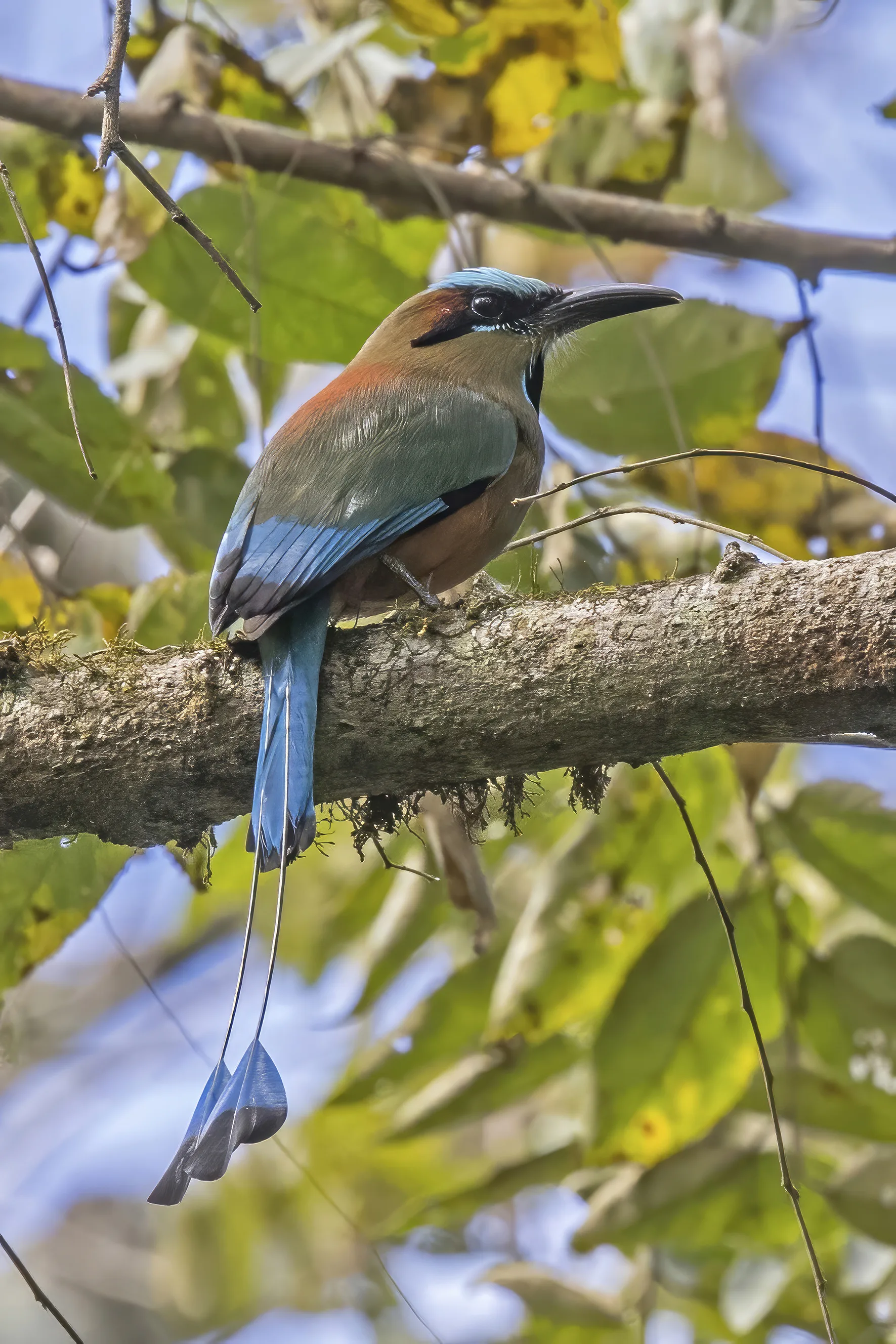
A roadside stop in dry-forest habitat breaks up the drive and gets the group's first real birding of the trip in: Turquoise-browed Motmot, Plain Chachalaca, White-throated Magpie-Jay, Rufous-backed Wren (the local subspecies castaneus, Honduras's Sula Valley population of what was, until eBird/Clements formally split the complex in their 2024 update, lumped together with two other species as "Rufous-naped Wren"), White-lored Gnatcatcher, and Squirrel Cuckoo. Roadside edges here also turn up White-tailed Deer and Nine-banded Armadillo, both regular at dawn and dusk, and the first butterflies of the trip: Gulf Fritillary (Dione vanillae) and Julia Heliconian (Dryas iulia), both common along sunny scrub edges where their passionflower-vine larval hosts grow.
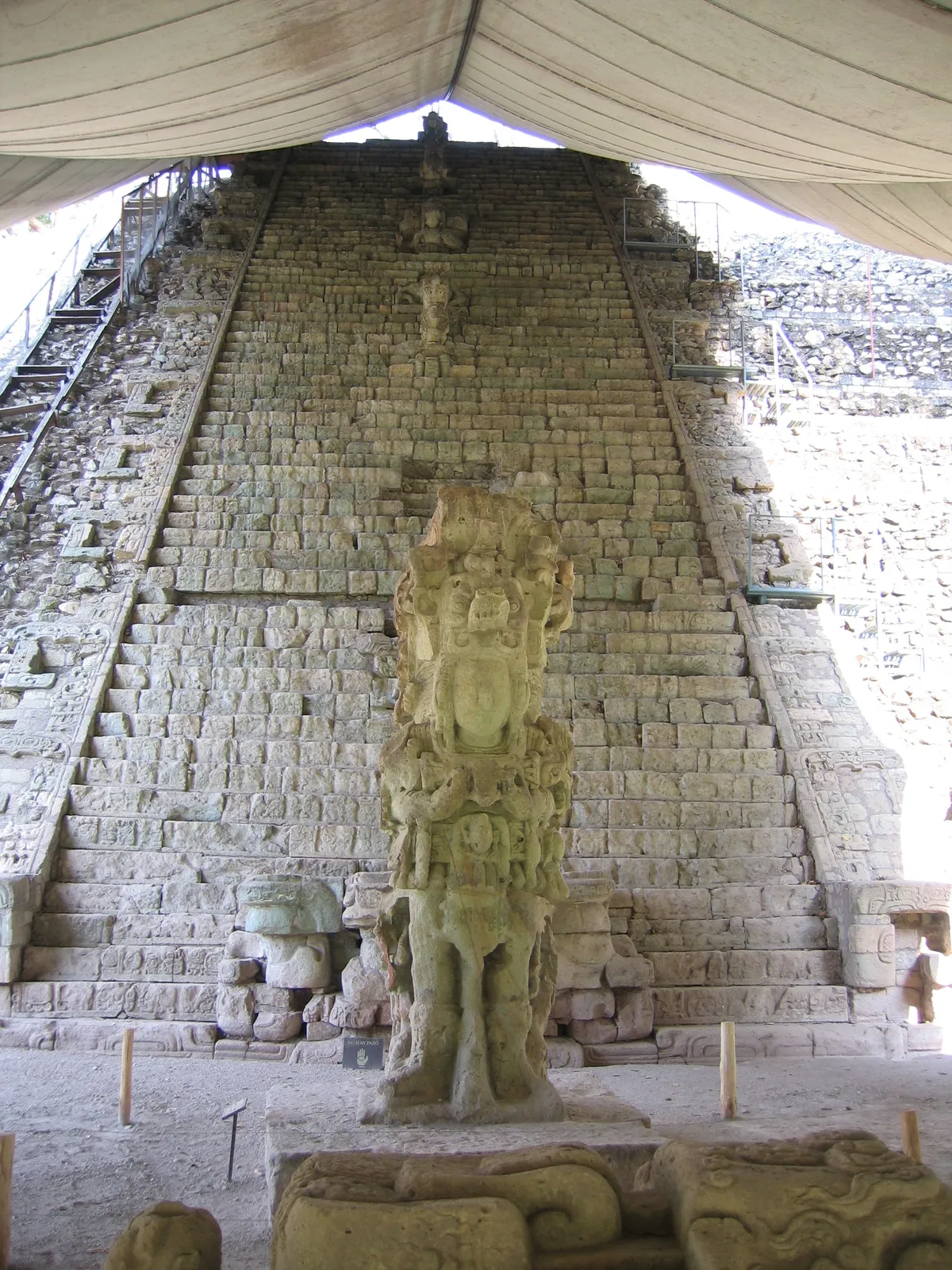
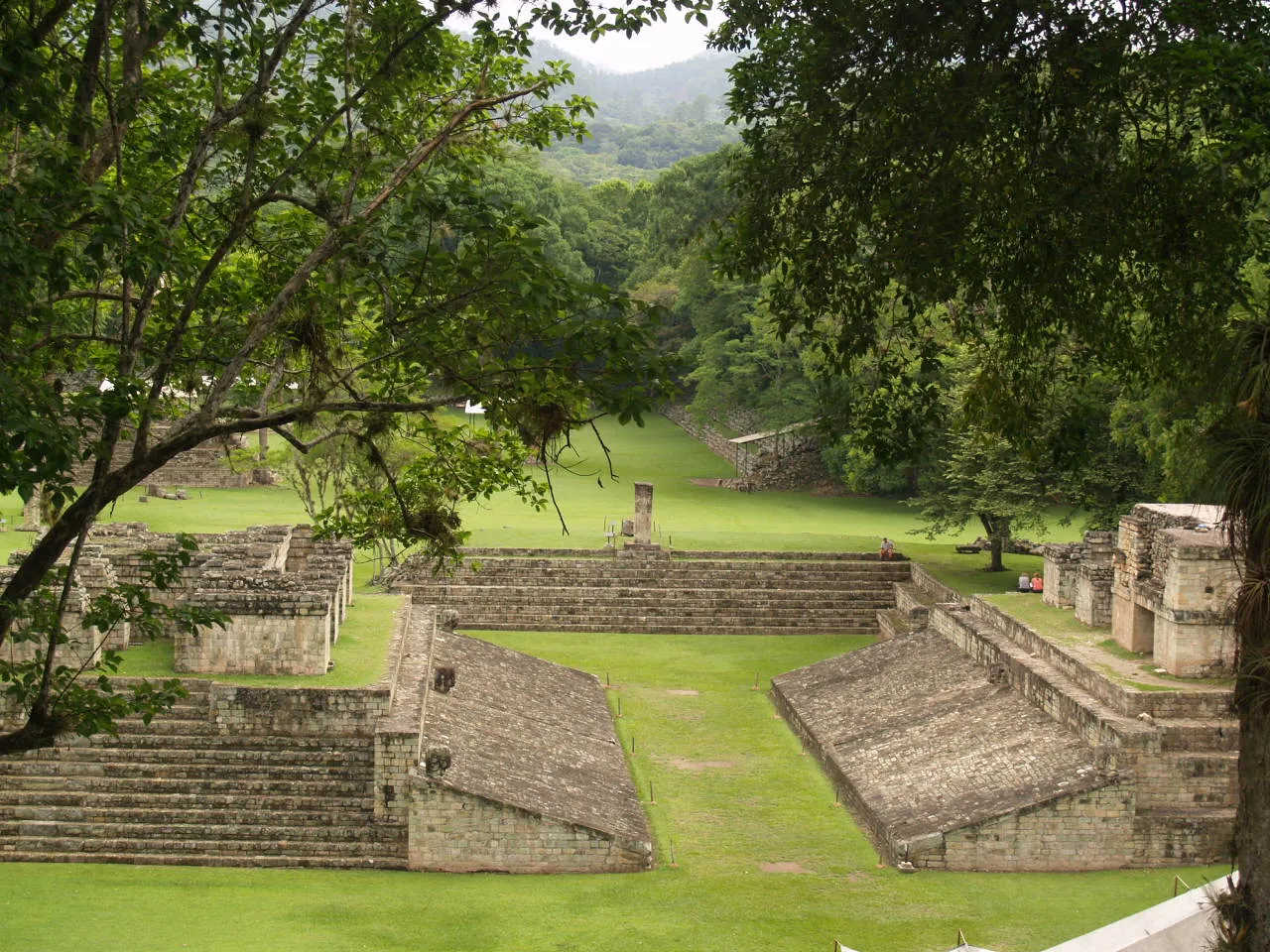
An early birding walk through the forested grounds of the Copán Archaeological Park before the gates open to crowds. The park's mature shade trees, many left standing when the site was cleared and consolidated in the 20th century, form a canopy over the plazas themselves, so birding and Maya architecture overlap directly underfoot and overhead. Then a guided cultural tour of the ruins: a UNESCO World Heritage Site famous for its hieroglyphic stairway (the longest known Maya text), the Great Plaza with its carved stelae, and the ballcourt, followed by the on-site sculpture museum, which houses a full-scale walk-through replica of the Rosalila Temple, discovered intact beneath a later structure in 1989.
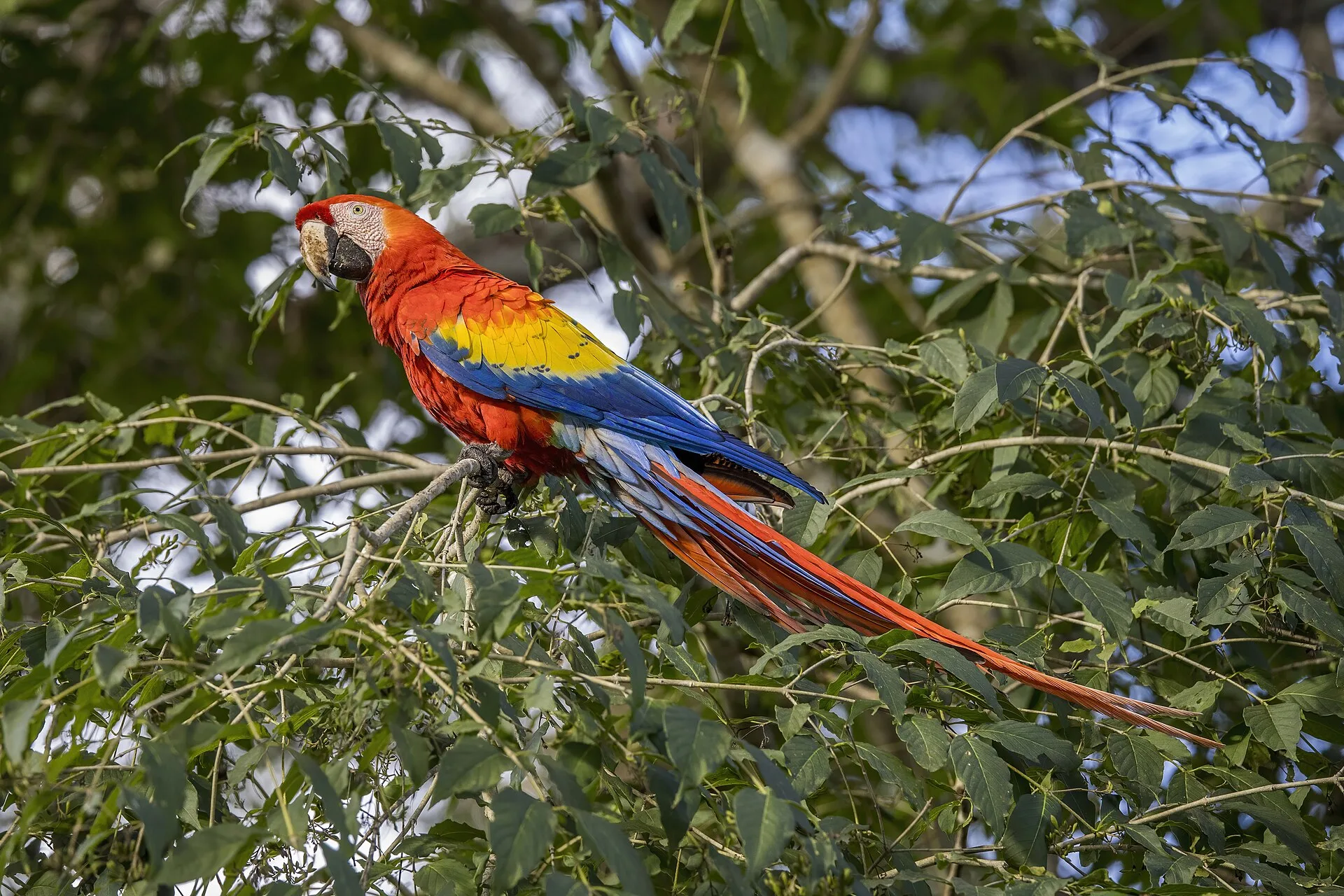
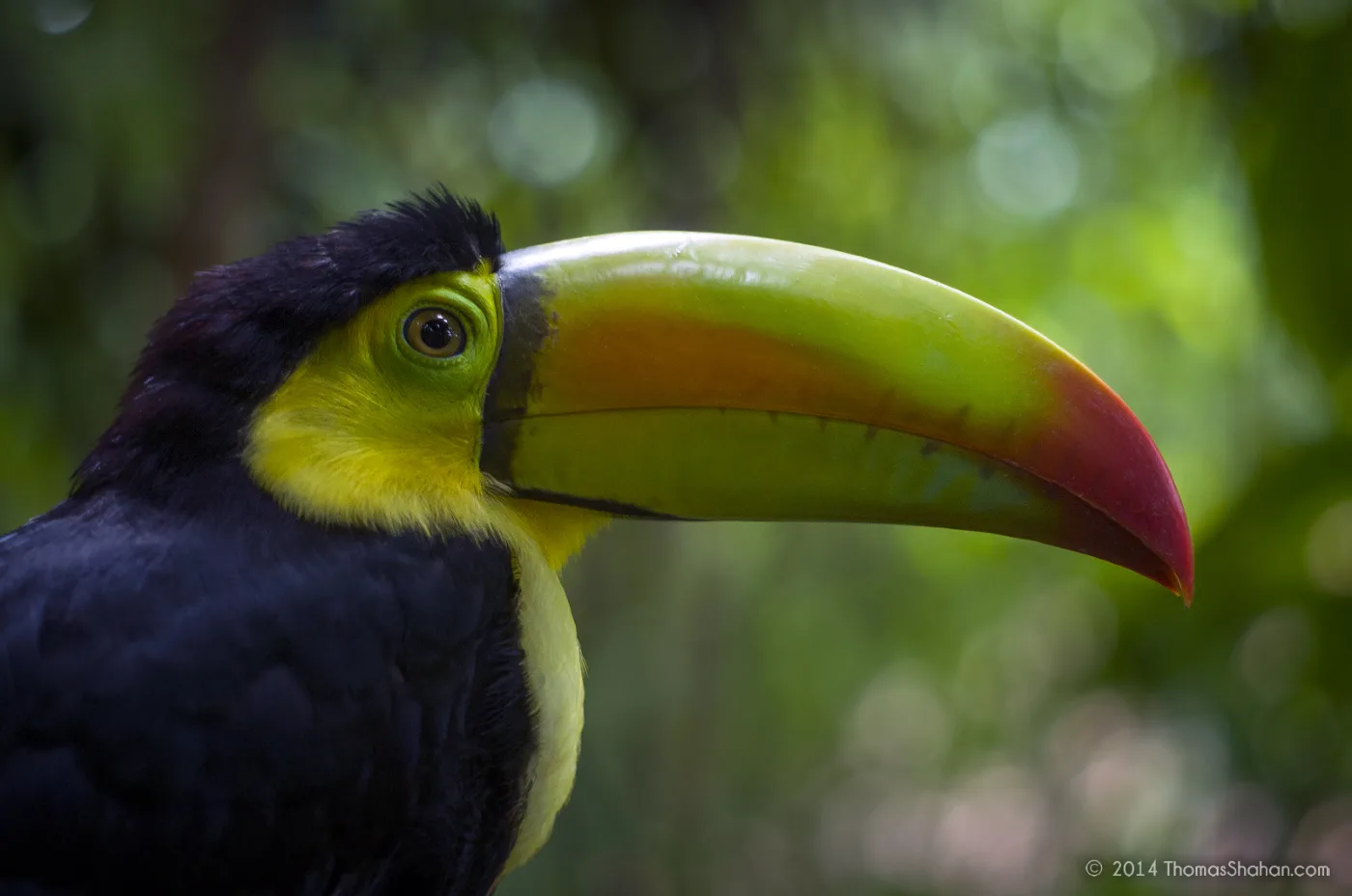
Afternoon at Macaw Mountain Bird Park & Nature Reserve, a rescue-and-release aviary set in a small canyon along the Sesesmil River, threaded through a working shade-grown coffee farm and stands of old-growth riverine forest. Birds today: Scarlet Macaw (Honduras's national bird, part of the park's long-running breeding and reintroduction program), Great Green Macaw, Red-lored Amazon, White-fronted Amazon, Black-headed Trogon, Montezuma Oropendola (look up for their long, pendulous woven nests hanging from canopy branches), Golden-fronted Woodpecker, Spot-breasted Oriole, Great Swallow-tailed Swift, and Keel-billed Toucan. Forest along the canyon holds White-nosed Coati and Central American Agouti, both regular by day.
The river canyon's shaded, humid microclimate is unusually good for butterflies: Blue Morpho (Morpho helenor), Malachite (Siproeta stelenes), Zebra Longwing (Heliconius charithonia), White Peacock (Anartia jatrophae), and Glasswing (Greta oto), whose nearly transparent wings, lacking the scales that give most butterflies their color, are a genuine crowd-pleaser.
A full day in the pine-oak highlands above town (Sesesmil River valley/Finca El Cisne), where the vegetation shifts decisively from the dry lowland scrub of Day 2 to true montane forest: Honduran pine (Pinus oocarpa, the dominant conifer across much of highland Honduras) mixed with several oak species (Quercus), their branches often draped in epiphytic bromeliads, orchids, and hanging Spanish moss (Tillandsia usneoides, not a true moss, but a bromeliad that takes all its moisture and nutrients from the air). Understory tree ferns and mixed broadleaf thickets hold a distinctly different bird community from the valley floor below.
Target birds: Bushy-crested Jay, Blue-and-white Mockingbird, Rufous-collared Sparrow (abundant along forest edges and clearings; its thin, whistled song is one of the signature sounds of Central American highlands), Hooded Warbler, Wilson's Warbler, Rufous-capped Warbler, Elegant Euphonia, and Northern Emerald-Toucanet (one of five species split from the old, broadly-defined "Emerald Toucanet" complex; this is the population found from Mexico to Panama). A working shade-grown coffee finca rounds out the day: Copán's coffee is grown under a canopy of Inga trees (locally guamá, usually Inga edulis, known in English as the ice-cream bean or paterna, and named for the sweet, cottony white pulp surrounding its seeds), whose nitrogen-fixing roots and dense shade double as prime habitat for wintering North American warblers, which is exactly why this cupping-and-cultural stop and the day's best birding happen at the same place. Gray Fox and Northern Raccoon both turn up along the forest edges here, and the day's butterflies, Giant Swallowtail (Papilio cresphontes), Ruby-spotted Swallowtail (Papilio anchisiades), and Cloudless Sulphur (Phoebis sennae), favor the sunnier clearings between coffee rows.
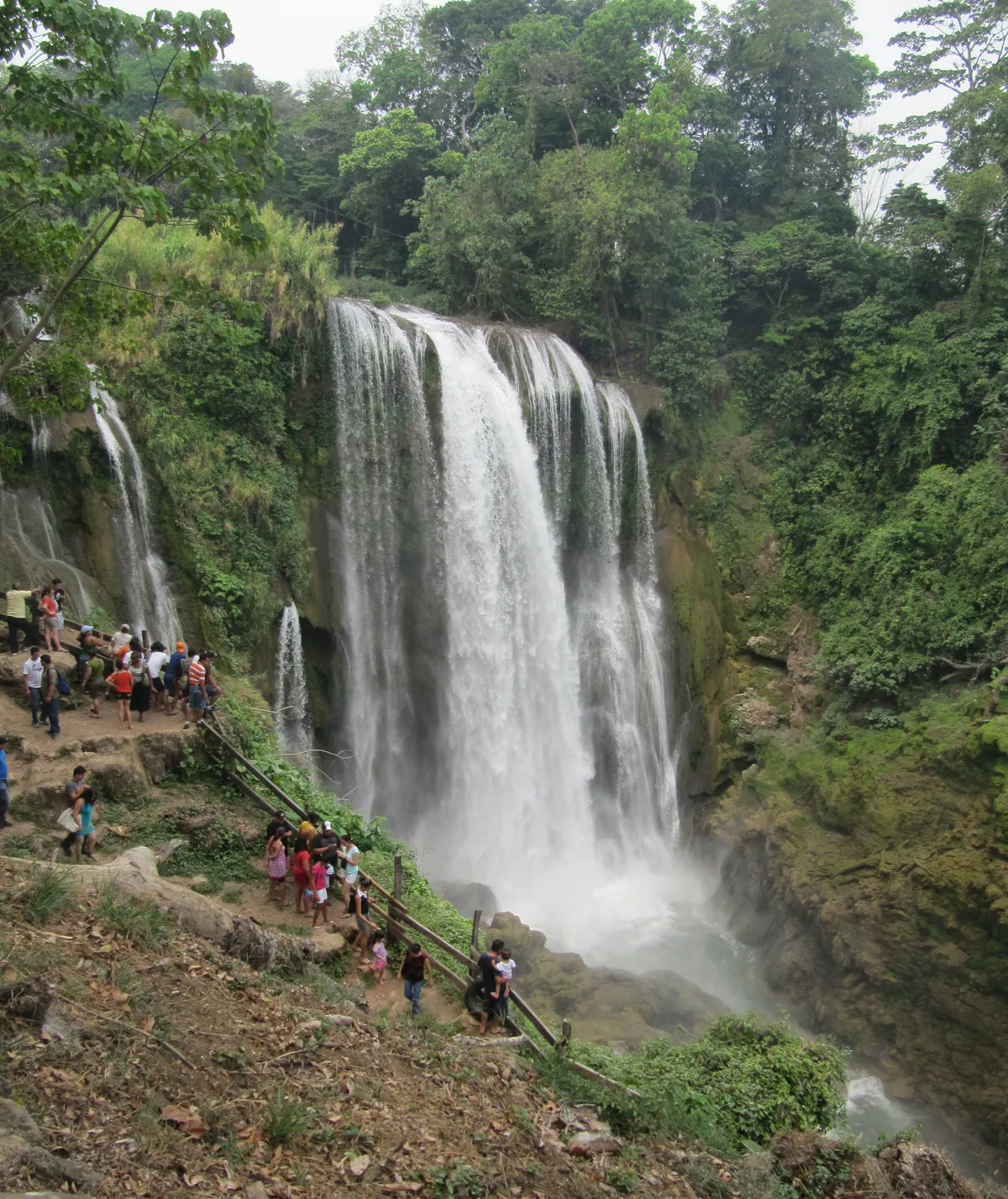
A scenic 3.5-hour drive east to Lake Yojoa, Honduras's largest natural lake: a volcanic-origin basin ringed by two national parks and, at 285 km², the country's single richest birding watershed, with roughly 500 species recorded across its combined forest, marsh, and open-water habitats. En route, a stop at Pulhapanzak Waterfall, a 43-meter cascade on the Río Lindo where the underground drainage of the lake itself resurfaces; the spray zone supports a distinct band of moisture-loving vegetation (tree ferns, philodendrons, mosses) even as the surrounding hillsides stay drier.
Birds around the falls: Louisiana Waterthrush and Black Phoebe, both bobbing along the rocks at the plunge pool's edge, White-collared Swift wheeling over the falls themselves, and Amazon Kingfisher patrolling the calmer water downstream. Variegated Squirrel is common in the streamside trees. The falls' understory is good for Owl Butterfly (Caligo memnon, whose enormous hindwing eyespots are a classic predator-deterrent, mimicking the eyes of a much larger animal) and Postman (Heliconius melpomene, one of the best-studied butterflies in the world for its role in the evolution of mimicry: it's chemically defended, having absorbed toxic compounds from the passionflower vines its caterpillars eat, and has evolved nearly identical wing patterns to the unrelated, similarly-defended Erato Longwing (Heliconius erato) across their shared range, a textbook case of Müllerian mimicry in which two toxic species converge on the same warning coloration so predators only have to learn one pattern to avoid; the pair has become a model system for studying how genes controlling color pattern evolve and how new species form).
The drive continues up into Cerro Azul Meámbar National Park, gaining elevation steadily as the vegetation shifts from lake-basin lowland forest into true cloud forest: oaks such as Quercus oocarpa and Quercus skinneri and broadleaf evergreens including sweetgum (Liquidambar styraciflua) and the native conifer Podocarpus oleifolius increasingly wrapped in epiphytes, with mist regularly settling over the upper slopes by mid-afternoon.
A dawn hike on PANACAM's cloud-forest trails, where the canopy is thick with orchids, bromeliads, and thick cushions of moss and lichen: the whole system depends on the near-constant cloud cover trapping moisture at this elevation. Trailside birding turns up Lesson's Motmot (the species that occupies Honduras and most of Central America, following the six-way split of the old "Blue-crowned Motmot" complex), Keel-billed Motmot, Tody Motmot, Black-crested Coquette, Spectacled Foliage-gleaner, Chestnut-headed Oropendola, and Giant Cowbird, a brood parasite that specializes in laying its eggs in oropendola and cacique nests.
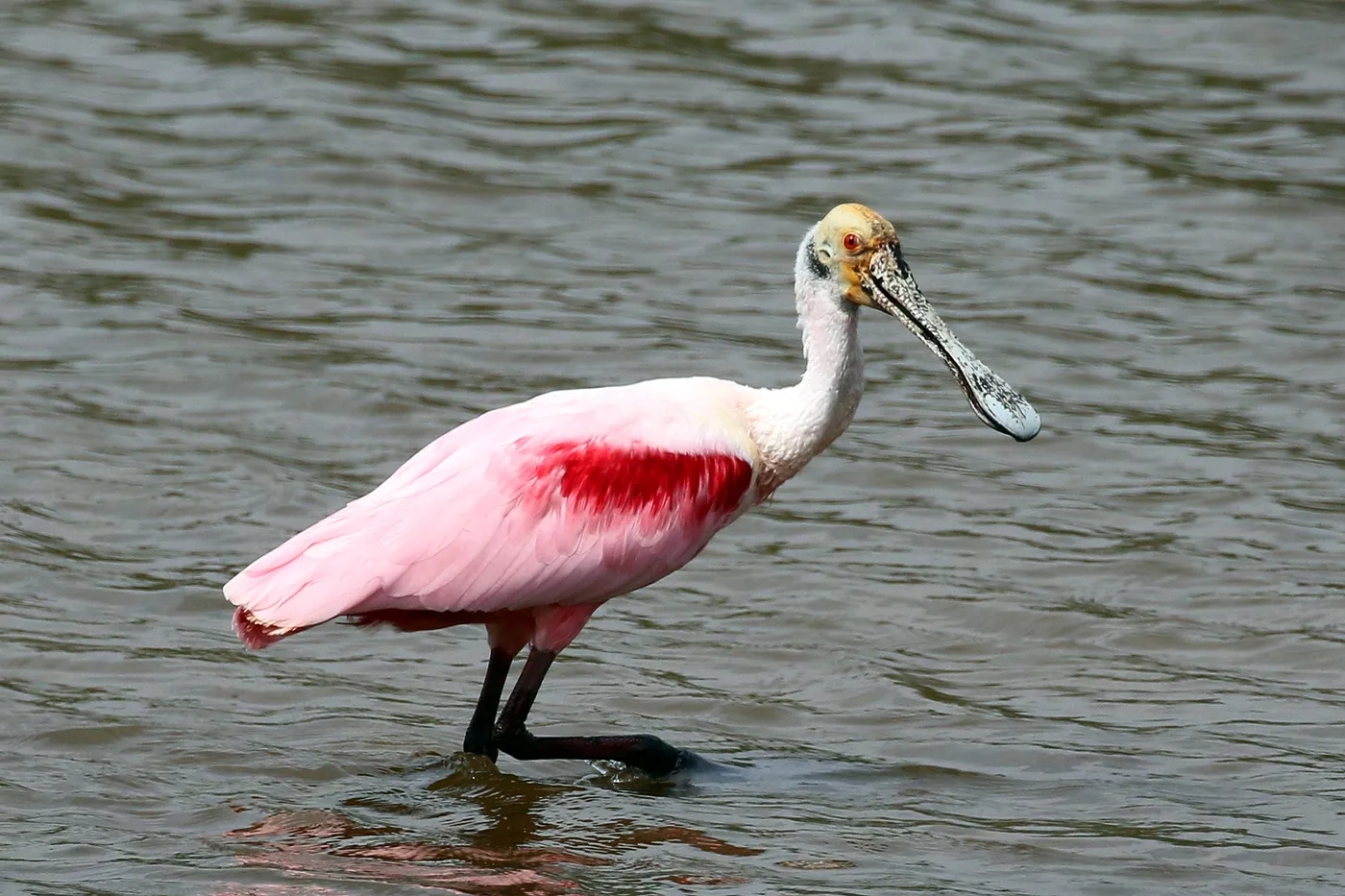
The afternoon shifts entirely: a boat trip along Lake Yojoa's marshes and reed edges is one of the richest single outings of the whole trip for sheer variety, from Agami Heron and Bare-throated Tiger-Heron stalking the shallows to Jabiru (the largest flying bird in the Americas) and Roseate Spoonbill working the mudflats, plus Northern Jacana, Snail Kite (a specialist predator of apple snails, its curved bill built for the job), Black-bellied Whistling-Duck, Zone-tailed Hawk (a mimic of Turkey Vulture in flight, which lets it approach prey unnoticed), and Gray-breasted Crake calling from the reed margins.
Neotropical River Otter is occasionally seen working the lake edge by day, and Kinkajou (a nocturnal, prehensile-tailed relative of raccoons, more closely related to olingos than to true monkeys despite its monkey-like appearance) is a good after-dark spotlighting target near the lodge. Butterflies today: Sara Longwing (Heliconius sara), Doris Longwing (Heliconius doris), Banded Peacock (Anartia fatima), and Banded Orange Heliconian (Dryadula phaetusa).
A roughly 3-hour drive north to La Ceiba on the Caribbean coast, entering the Cangrejal River valley between Pico Bonito and Nombre de Dios National Parks. The habitat shift is the most dramatic of the trip: highland cloud forest gives way to true Caribbean lowland rainforest, with towering Ceiba trees, strangler figs (Ficus species that germinate in the canopy and send roots downward, eventually engulfing and outliving their host tree), and stands of Cecropia, a fast-growing pioneer tree whose hollow stems house protective ants and whose leaves are a favored food of sloths. Palms diversify sharply here too, from the stilt-rooted walking palm (Iriartea deltoidea) to the corozo palm (Attalea) with its heavy clusters of oil-rich fruit.
Afternoon birding on the lodge's forest trails: Collared Aracari, Black-and-white Owl, White Hawk, Violet Sabrewing (one of the largest hummingbirds in Central America), Long-billed Hermit, Rufous-tailed Hummingbird, Green Honeycreeper, Red-legged Honeycreeper, Scarlet-rumped Tanager (renamed from "Passerini's Tanager" in the 2018 eBird/Clements update, when the Pacific-slope form once split off as Cherrie's Tanager was lumped back in), and King Vulture riding thermals over the valley. All three of the region's primates are realistic in a single afternoon here: White-faced Capuchin, Central American Spider Monkey, and Mantled Howler Monkey, whose roaring dawn chorus, audible more than a kilometer through dense forest, is one of the loudest sounds any land animal makes.
Butterflies: Tiger-striped Leafwing (Consul fabius), Red Rim (Biblis hyperia), Dorantes Longtail (Urbanus dorantes).
A full-day excursion by rail-cart and skiff into the Cuero y Salado refuge, a protected triangle of river channels between the Cuero and Salado rivers where red mangrove (Rhizophora mangle, identifiable by its distinctive arching prop roots) gives way further inland to black mangrove (Avicennia germinans, which breathes through pencil-like root projections called pneumatophores) and freshwater marsh. It's one of the best wildlife-viewing mornings of the whole trip.
Birds: Sungrebe (a small, secretive waterbird whose males carry their chicks in a specialized skin pouch under the wing), American Pygmy Kingfisher, Boat-billed Heron, Green Ibis, Anhinga, Mangrove Swallow, Ringed Kingfisher, Green Kingfisher, and Common Black Hawk hunting crabs along the channel edges. The refuge is one of the most reliable manatee sites in Honduras: an estimated 50 West Indian Manatees live within its channels. The boat trip also regularly turns up Black Howler Monkey in the streamside trees, along with American Crocodile and Spectacled Caiman basking on the banks.
Butterflies along the shaded channel edges: Isabella's Longwing (Eueides isabella), Crimson-patched Longwing (Heliconius erato), Eighty-eight Butterfly (Diaethria anna, named for the number-like pattern on its underwing).
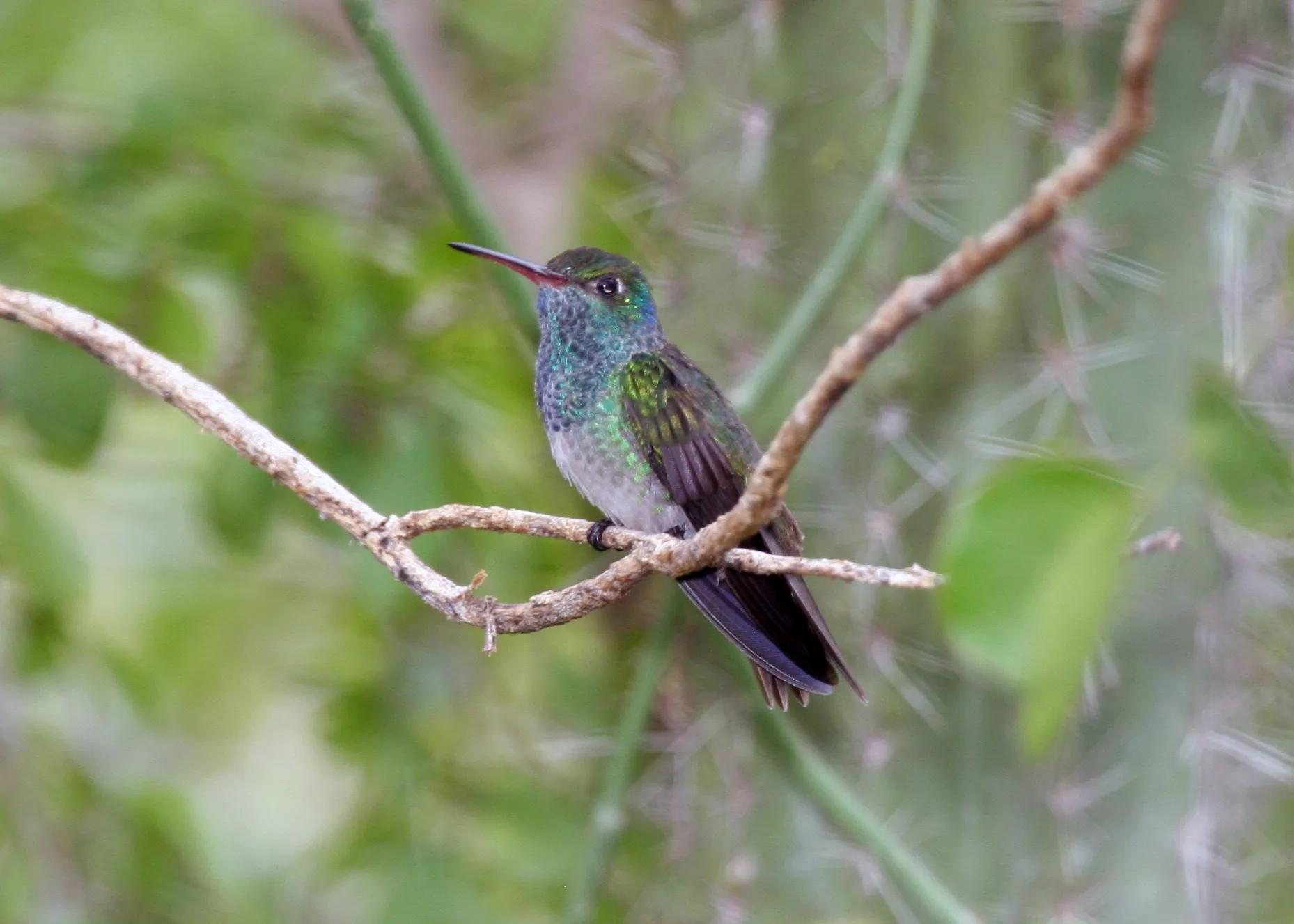
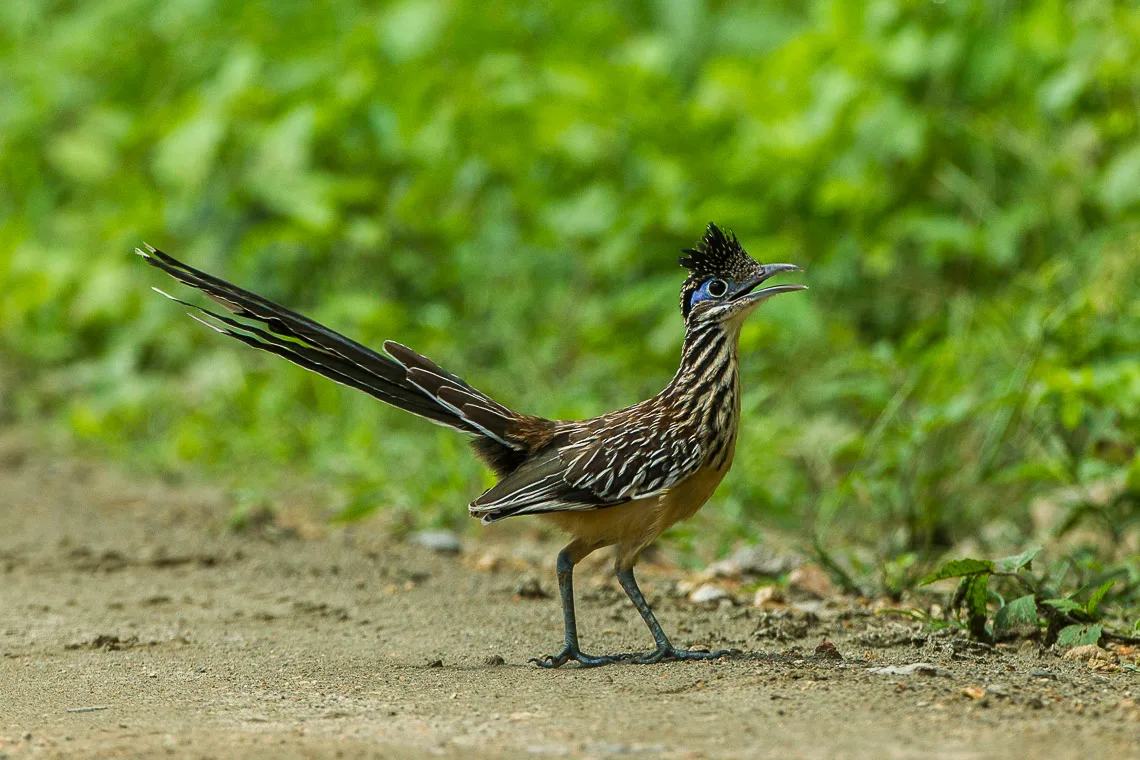
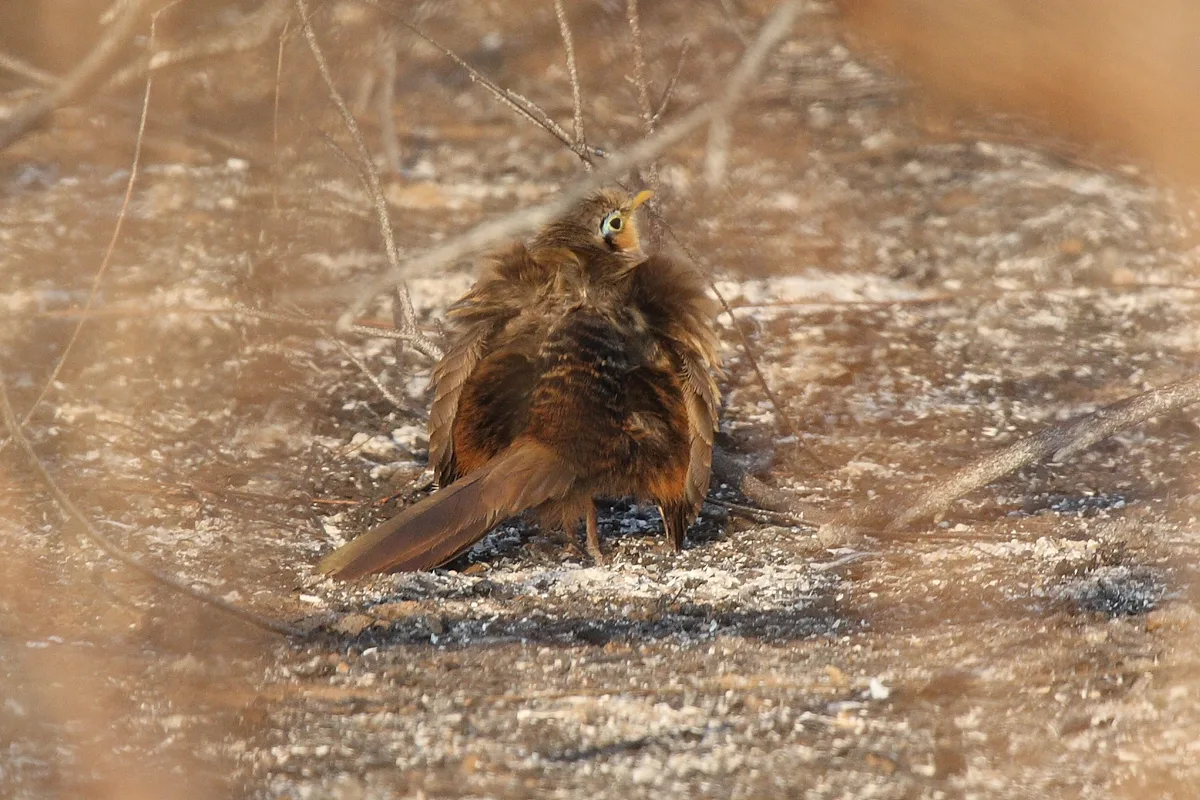
Pre-dawn departure to the dry-forest pockets south of the park: a startling habitat switch from the rainforest around the lodge, back into thorn-scrub and deciduous woodland dominated by Acacia, columnar cacti, and drought-deciduous trees that drop their leaves for the dry season. This is the only habitat on Earth where the trip's headline target, Honduran Emerald (Honduras's only true bird endemic, a hummingbird found nowhere else in the world and currently classified as Endangered), can be found, alongside Canivet's Emerald (the local Pacific-slope/highland subspecies group, historically called "Salvin's Emerald" in field guides; genetically and geographically distinct enough that some authorities argue it deserves full species status, though current mainstream taxonomy still treats it as part of Canivet's Emerald rather than a separate species), Lesser Roadrunner, Lesser Ground-Cuckoo, Cinnamon Hummingbird, Stripe-tailed Hummingbird, Streak-backed Oriole, and Banded Wren.
This dry-forest reserve is also locally well known among visiting birders for its dragonfly and butterfly diversity, likely because the scrubby, sun-exposed habitat concentrates nectar sources in a way closed-canopy rainforest doesn't: Common Buckeye (Junonia coenia), Question Mark (Polygonia interrogationis), Mexican Bluewing (Myscelia ethusa), and Mexican Silverspot (Dione moneta) are all regular here. Collared Peccary and Gray Four-eyed Opossum round out the morning's mammal sightings.
Afternoon cultural visit to a Garífuna coastal village near La Ceiba: an Afro-Indigenous community descended from shipwrecked and escaped West African slaves who intermarried with Island Carib and Arawak peoples on St. Vincent in the 17th–18th centuries, later exiled to the Central American coast by British colonial authorities in 1797. The community retains its own language (Garifuna, an Arawakan language with African and French loanwords), distinctive drumming and punta music, and cassava-based cuisine, and is recognized by UNESCO as a Masterpiece of the Oral and Intangible Heritage of Humanity. Arranged through the lodge as a respectful, community-hosted visit.
A last push on Pico Bonito's canopy observation towers before breakfast: platforms built up into the emergent rainforest canopy, well above the forest floor's usual sightlines, and the best chance in the trip at the lodge's signature rarities: Lovely Cotinga (a bird so revered by the Aztec and Maya that its iridescent turquoise feathers were reserved for royalty and traded across Mesoamerica), Great Curassow, Royal Flycatcher (its spectacular fan-shaped crest, normally folded flat and invisible, is raised only in display or when handled), Great Potoo, Ornate Hawk-Eagle, Purple-crowned Fairy, and Chestnut-colored Woodpecker. Butterflies: American Snout (Libytheana carinenta), Orange-barred Sulphur (Phoebis philea), Cattleheart (Parides iphidamas).
Then the drive to San Pedro Sula, dropping back out of the coastal forest belt and into the Sula Valley: Honduras's industrial and agricultural heartland, and possibly the hottest and driest stop of the entire trip.
Breakfast at the hotel, then transfer to Ramón Villeda Morales International Airport (SAP) for departure flights. No new species targeted; this is a travel day.
This journey isn't open for registration yet. The full itinerary is set out above; final pricing opens soon. Register your interest below and we'll contact you personally the moment it opens.
All ground transportation for the full 11 days, including mini-coach charter and driver; 10 nights' double-occupancy accommodation in Comayagua (1), Copán (3), Lake Yojoa / PANACAM (2), Pico Bonito (3), and San Pedro Sula (1); meals (breakfast, lunch and dinner); local Honduran guides and Ecotone Journeys tour guides accompanying the group throughout; entrance fees for Copán archaeological park and museum, Macaw Mountain, Pulhapanzak Waterfall, Cuero y Salado Wildlife Refuge, and the Garífuna village visit; and gratuities for the local guide and driver.
International airfare to Comayagua (XPL) and from San Pedro Sula (SAP); travel and medical evacuation insurance, strongly recommended for a journey of this length; drinks or snacks outside included meals; most alcoholic beverages; personal expenses such as souvenirs, laundry, spa treatments, and phone or data charges; gratuities for Ecotone Journeys guides, at guests' discretion; Honduran departure taxes if not already included in airfare; and any activity, meal, or excursion beyond those listed as included.
This journey isn't open for registration yet. Register your interest and we'll contact you personally if a place or a new departure becomes available.